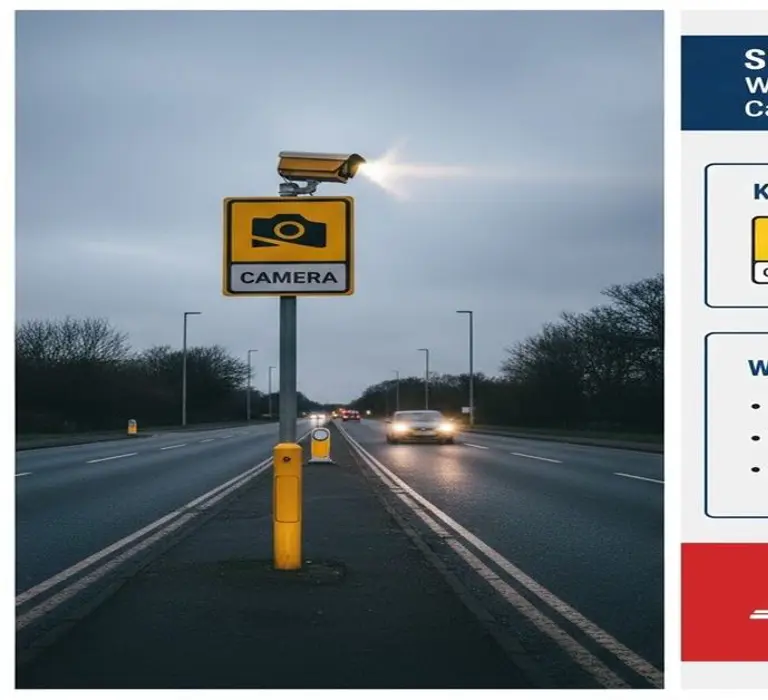
Speed camera signs are common across UK roads, but they do not always mean a camera is actively monitoring traffic. Some signs warn of possible enforcement, while others mark areas where cameras are used only at certain times.
This guide explains what UK speed camera signs mean, when cameras are actually used, and how drivers can tell the difference.
Related Article: Speed Cameras Explained
Looking to Lease a Car? Get Exclusive Deals Today!
Speed Camera Sign Meaning in the UK
A speed camera sign warns that speed enforcement may be used on that stretch of road. It does not confirm that a camera is switched on or even visible at that location.
These signs are mainly used to:
-
Encourage drivers to slow down in higher risk areas
-
Support fixed, mobile, or average speed enforcement
-
Reduce sudden braking by warning drivers in advance
This is why drivers often notice signs even when no camera can be seen nearby.
Learn more about car leasing options while keeping your speed in check.

Do Speed Camera Signs Always Mean There Is a Camera?
No. Many speed camera signs are permanent warnings rather than indicators of active enforcement at that exact moment.
You may see a sign when:
-
Mobile speed cameras are used only occasionally
-
Enforcement happens at different points along the same road
-
The area has a history of speeding or collisions
The sign stays in place even when a camera is not present. It is also important to note that speeding is still illegal and enforceable even if no warning signs are present on a specific stretch of road.
Also Read: DVLA banned number plates
Why Are There Speed Camera Signs but No Cameras?
This is intentional and allowed under UK road enforcement rules. Speed camera signs remain because:
-
Mobile cameras are moved between approved locations
-
Average speed zones may not show cameras at every point
-
Signs alone reduce speeding without constant enforcement
Seeing a sign without a camera does not mean enforcement never happens. It means the road is approved for monitoring when required.
Types of Speed Camera Signs in the UK
Different signs are used depending on how speed is monitored.
Mobile Speed Camera Signs
Mobile speed camera signs warn drivers that temporary enforcement may be used.
Mobile cameras:
-
Are often operated from vans, motorbikes, or tripods
-
Are active only at certain times
-
May not be present every time you pass the sign
These are commonly used on local roads, bridges, and accident-prone routes.
Also Check: DVLA number plate change
Average Speed Camera Signs
Average speed camera signs mark zones where your speed is measured over distance, not at a single point.
In these areas:
-
Multiple cameras track vehicles across a section of road
-
Slowing briefly for one camera does not reduce your average speed
-
Cameras are often mounted on bright yellow poles or gantries
Average speed enforcement is increasingly common on motorways and during long-term roadworks.
Yellow Speed Cameras on UK Roads
In the UK, the government requires that almost all fixed speed cameras are painted bright yellow to ensure they are visible to drivers.
They:
-
Are permanently installed at the roadside or on overhead gantries
-
Must be visible from a certain distance (usually 60 metres in 40mph zones or less, and 100 metres in higher speed limits)
-
Work in conjunction with road markings (dragon’s teeth or lines)
While some older grey housings may still exist, the vast majority of active cameras—including those on motorways—are yellow or housed in yellow casings for visibility.
Other Speed Camera and Warning Signs
Some roads also use:
-
Electronic speed signs (SIDs) that display your current speed
-
Camera symbols near restricted zones (like Low Emission Zones or bus lanes)
-
Older camera housings (Gatso) used as deterrents
Not all of these indicate speed enforcement; some are for congestion charging or traffic management.
Do Radar Speed Signs Have Cameras?
Most radar speed signs (Speed Indicator Devices) do not issue fines.
These signs:
-
Detect your speed and display it back to you (often with a "thank you" or a sad face)
-
Do not record offences or transmit data to the police
-
Are used purely as a psychological tool to encourage drivers to slow down
They are often confused with real speed cameras, but they are warning tools only.
Are Speed Cameras Always On?
Not necessarily.
-
Fixed cameras: Can operate 24/7, but some are "dummies" or rotated between housings.
-
Mobile cameras: Only active when the officer is deployed.
-
Average speed cameras: Usually monitor continuously within the marked zone.
-
Smart Motorway Cameras (HADECS3): These are active whenever the motorway is in use, adjusting to the variable speed limits shown on gantries.
No Entry Signs and Cameras
Not all no entry signs have cameras, but enforcement is increasing.
Cameras are usually installed where:
-
Local authorities have "Moving Traffic Enforcement" powers (common in London and increasing across major UK cities)
-
Drivers frequently ignore restrictions, creating safety risks
-
The area is a designated school street or low-traffic neighbourhood
Many no entry signs remain as warnings, but in urban areas, they are increasingly monitored by CCTV.
How to Spot a Real Speed Camera
Signs alone are not enough to confirm enforcement. Common indicators include:
-
Bright yellow boxes at the roadside
-
Small, grey or yellow cameras on motorway gantries
-
Enforcement vans with rear windows open or camera logos on the side
-
Painted lines on the road surface (used by cameras to calculate distance/time)
Understanding this helps drivers stay compliant without relying on last-second braking.
Practical takeaway for drivers
If you see a speed camera sign, drive as if enforcement could be active. Signs are placed based on risk, not constant camera presence.
This matters even more when driving a leased vehicle, as speeding fines and penalty points can create extra admin and potential "representation fees" from the leasing company during the lease term. Choosing a car that suits your regular driving environment can also make motorway and urban driving easier. You can explore personal car leasing options based on how and where you drive most often.
FAQs About Speed Camera Signs
No. While it is standard practice to display them, there is no legal requirement for a speed camera sign to be visible for a speeding fine to be valid.
To act as a deterrent. The road is authorised for enforcement, but cameras may be mobile or rotated between different sites.
No. Speed Indicator Devices (SIDs) do not have the technology to capture images for prosecution; they are for education and awareness.
Not always. Some radar signs only display your speed without enforcement.
Fixed and average speed cameras are usually "always on," but they may not always contain film (in older models) or be actively processing data. Smart motorway cameras are almost always active.
No. Only specific locations, typically in busy city centres or near schools, use cameras for enforcement.
Editor’s Note: This post was originally published on 17th March 2020 and has been updated for freshness, accuracy, and comprehensiveness.
Subscribe To Our Newsletter Receive weekly updates on our latest deals, articles and more!
Contact: [email protected]