Average speed cameras are one of the most misunderstood enforcement systems on UK roads. Many drivers know they calculate speed over distance, but confusion around flashing, tolerance, lane changes, and leased cars still leads to unnecessary fines.
This guide explains exactly how average speed cameras work in the UK, clears up common myths, and answers the questions people actually search for.
What Is an Average Speed Camera?
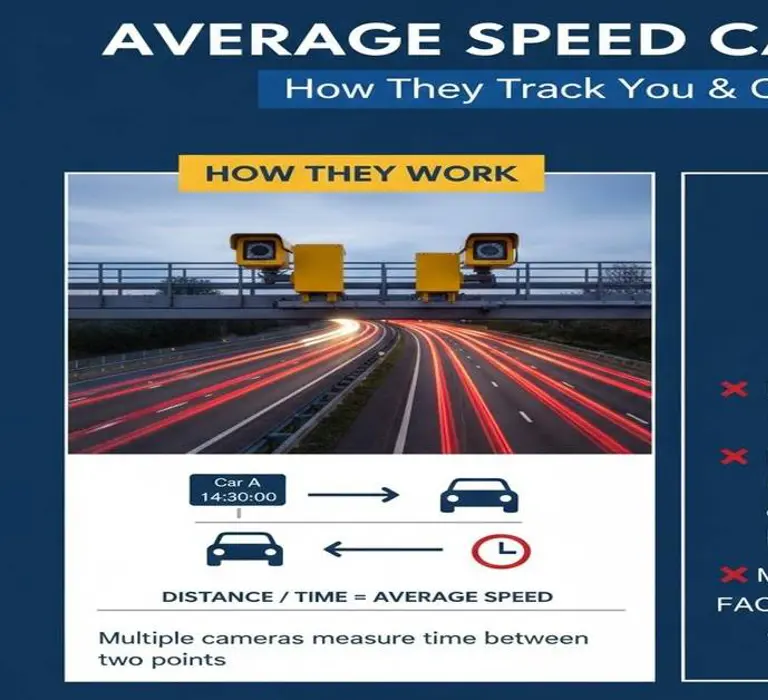
An average speed camera is a system made up of two or more cameras placed along a stretch of road. Instead of measuring your speed at one point, the system calculates how long it takes your vehicle to travel between cameras.
Your average speed is then worked out using distance and time. If that average is above the speed limit, a fine can be issued.
These cameras are widely used on motorways, A-roads, roadworks, and long dual carriageways where steady traffic flow matters more than catching short bursts of speeding.
Looking to Lease a Car? Get Exclusive Deals Today!
How Do Average Speed Cameras Work?
When your vehicle passes the first camera, your number plate is recorded along with the exact time. The same happens at the next camera.
The system compares:
-
Distance between cameras
-
Time taken to travel that distance
If the calculated average speed exceeds the limit, the vehicle is flagged.
Unlike single-point cameras, slowing down briefly does not help. Driving consistently within the limit is the only way to avoid a fine.
Do Average Speed Cameras Flash?
Most average speed cameras in the UK do not flash. They use infrared technology to capture number plates without visible light.
This is why many drivers are caught without realising it. No flash does not mean no enforcement.
Some older systems may still flash, but relying on a flash as a warning is one of the most common mistakes drivers make.
Do Average Speed Cameras Work Across Lanes?
Yes. Average speed cameras track vehicles across all lanes.
Changing lanes does not break the calculation and does not reset the system. The cameras follow your number plate, not your lane position.
Average Speed Camera Tolerance in the UK
There is no officially published tolerance for average speed cameras.
Some drivers believe in a fixed allowance such as 10 percent plus 2 mph, but this is not guaranteed and should not be relied on.
Enforcement thresholds can vary depending on:
-
Road type
-
Location
-
Local authority or police force
The safest assumption is that anything above the posted limit can trigger enforcement.
Common Myths About Average Speed Cameras
Slowing Down at the Camera Avoids a Fine
False. The system measures your speed over distance, not at the camera itself.
Speeding Then Slowing Cancels It Out
False. Short bursts of speeding still raise your average speed.
They Only Work in One Lane
False. All lanes are monitored.
No Flash Means No Ticket
False. Most systems do not flash at all.
These myths are a major reason drivers receive fines they were not expecting.
Average Speed Cameras in Roadworks
Average speed cameras are commonly used in roadworks because they encourage consistent speeds rather than sudden braking.
Even if workers are not visible, the cameras remain active. Temporary limits still apply at all times unless signage clearly shows otherwise.
This is especially important on long motorway roadwork sections where drivers assume enforcement ends early.
What Happens If You’re Caught in a Leased Car?
If you are driving a leased vehicle, the fine does not disappear.
The notice is sent to the leasing company first. They then identify the driver and pass the details to the authorities. This can add delays and, in some cases, administration fees.
If you drive a lease vehicle regularly, it is worth understanding how speed enforcement works before choosing your next car lease.
You can explore current options on our car leasing page, or view personal car leasing and business car leasing options if you cover high motorway mileage.
Average Speed Cameras vs Other Speed Cameras
Average speed cameras are different from:
-
Fixed speed cameras
-
Mobile speed camera vans
-
Temporary speed cameras
If you want to understand how different systems are identified on UK roads, see our full guide to speed camera signs in the UK.
Why Average Speed Cameras Are Used So Widely
Authorities use average speed cameras because they:
-
Reduce harsh braking
-
Improve traffic flow
-
Lower accident rates
-
Encourage consistent driving behaviour
From an enforcement perspective, they are harder to avoid and easier to manage over long distances.
Related Reading
-
Speed Camera Signs UK – how to spot different camera systems
-
DVLA Banned Number Plates – what registrations are illegal in the UK
-
Speeding Fines UK Explained: How Much You Pay, Points, and What Happens Next
FAQs About Average Speed Cameras UK
Yes. They work day and night using infrared technology.
Yes. Modern systems can read motorcycle number plates.
Not always. Some systems cover long stretches that include junctions, so you should maintain the limit throughout.
Yes, but there is no way for drivers to know when this happens. Assume they are always active.