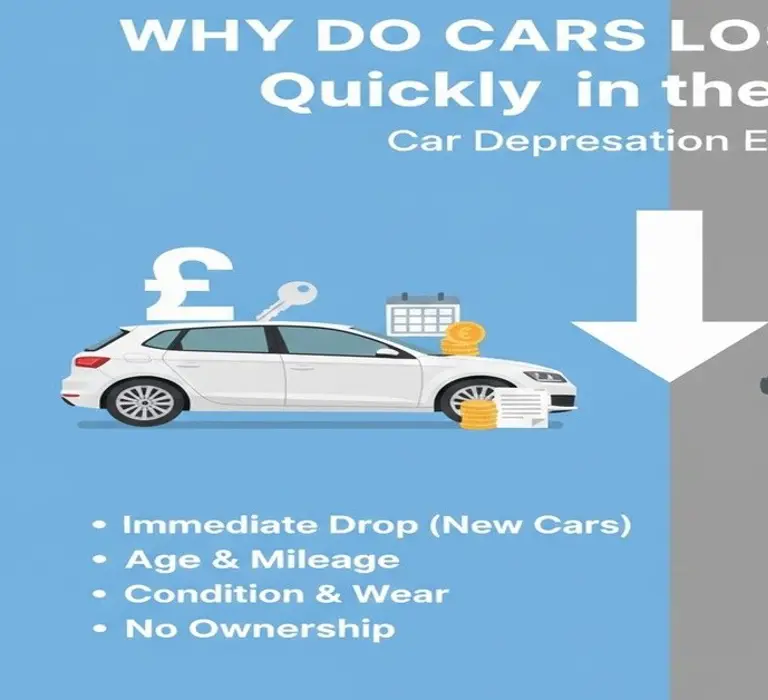
Car depreciation is one of the least understood - and most expensive - parts of owning a car in the UK.
Many drivers focus on fuel, insurance and monthly costs, but the biggest financial loss often happens quietly in the background as a car’s value falls year after year. Understanding why cars depreciate so fast, and how quickly that happens, is key to understanding the true cost of ownership.
What is car depreciation and why it matters in the UK
Car depreciation is the reduction in a vehicle’s market value over time. From the moment a car is registered, its value starts to fall.
In the UK, depreciation often outweighs fuel, servicing and insurance costs combined - particularly for drivers who change cars every few years. This makes car value depreciation in the UK one of the most important ownership costs to understand.
Looking to Lease a Car? Get Exclusive Deals Today!
How fast do cars lose value over time?
Most cars lose a significant amount of value in their early years.
The steepest drop usually happens in the first 12 months, followed by continued losses over the next few years. Even cars with low mileage and full service history are affected.
This is why questions such as how much do cars depreciate per year and average car depreciation per year are so common among UK drivers.
Why new cars lose value so quickly
New cars are hit hardest by depreciation.
Once a car is registered, it immediately becomes “used”, regardless of mileage. Manufacturer discounts, new model releases and strong competition in the used market all push values down quickly.
For many drivers, new car depreciation becomes the single biggest cost of ownership - far exceeding anything spent on fuel or maintenance.
Electric car depreciation and why EV values can fall faster
Electric car depreciation has become a growing concern.
Battery technology improves rapidly, charging standards evolve, and newer models often offer longer ranges at lower prices. This can make older electric cars feel outdated sooner than petrol or diesel alternatives.
Uncertainty around long-term battery health and future resale demand also plays a role in depreciation of electric cars, particularly for earlier-generation models.
For drivers considering an EV but wary of long-term value, some prefer options that limit exposure to depreciation risk.
Explore: Electric Car Leasing
What affects car depreciation rates in the UK?
Several factors influence how quickly a car loses value:
-
Mileage and usage
-
Service history and condition
-
Brand reputation for reliability
-
Fuel type and emissions rules
-
Market demand and body style popularity
Cars that fall out of favour with buyers tend to depreciate faster, regardless of how well they are maintained.
Why depreciation often feels like a hidden ownership cost
Depreciation doesn’t arrive as a bill, so it’s easy to overlook. It becomes visible only when:
-
Selling the car
-
Trading it in
-
Refinancing
-
Replacing the car sooner than planned
This is why depreciation is closely linked to wider car ownership costs in the UK, even though it’s rarely budgeted for upfront.
How depreciation influences real-world decisions
For drivers who:
-
Change cars regularly
-
Want predictable costs
-
Are concerned about resale value
-
Are cautious about rapid technology changes
Depreciation becomes a deciding factor, not just a background cost.
This is where alternatives that remove depreciation risk entirely start to make sense - not as a sales decision, but as a way to reduce uncertainty.
Explore: Car Lease Best Deals
Practical takeaway
Cars lose value quickly in the UK due to market competition, technology change and shifting demand - not because of how carefully they’re driven.
Understanding depreciation helps drivers see the full cost of ownership and choose options that better match how long they plan to keep a car and how much financial risk they’re willing to take.
FAQs: Car depreciation in the UK
Cars lose value due to oversupply in the used market, frequent model updates and declining demand as vehicles age.
Depreciation is steepest in the first few years, then slows over time. The exact rate varies by model, mileage and market demand.
Some electric cars depreciate faster due to battery concerns and rapid technology changes, though this varies by model.
For many UK drivers, yes. Depreciation often exceeds fuel, insurance and servicing costs over the ownership period.