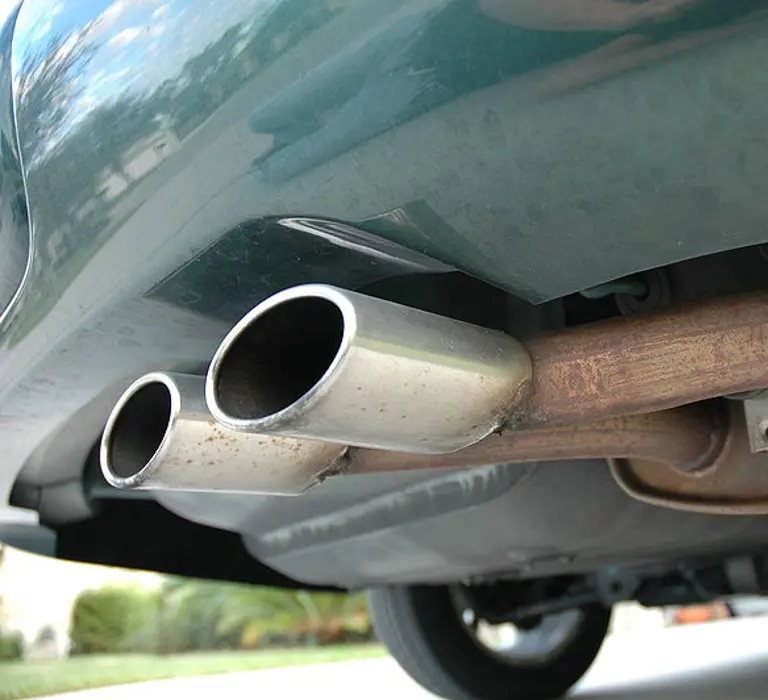
If your exhaust starts sounding louder than usual, rattling underneath the car, or looks like it is hanging down, it is normal to wonder whether you can still drive or if you need to stop immediately.
Many UK drivers face this situation, especially with older cars or after hitting speed bumps or potholes. The short answer is this: driving with a broken exhaust is not automatically illegal, but in many cases it can quickly become illegal, unsafe, or lead to an MOT failure.
What matters is the condition of the exhaust, how serious the damage is, and whether it creates a risk to you or other road users.
This guide explains when driving with a broken exhaust is allowed, when it is not, and what usually happens next.
Looking to Lease a Car? Get Exclusive Deals and Offers Today!
Is driving with a broken exhaust legal?
UK law does not say that a broken exhaust is illegal in all cases. However, it does make it an offence to use a vehicle on the road if its condition poses a danger to people.
In simple terms, driving with a broken exhaust becomes illegal if any of the following apply:
-
The exhaust is loose, hanging off, or likely to fall off
-
Exhaust gases can leak into the cabin
-
The vehicle is excessively noisy
-
The car would fail an MOT because of the damage
If the exhaust damage creates a safety risk, you should not be driving the car on public roads.
What makes a broken exhaust illegal?
Noise levels
An exhaust with holes, cracks, or missing parts often becomes much louder than normal.
UK rules require exhaust systems and silencers to be kept in good working order. If your car makes significantly more noise than it did when standard, it can be classed as illegal.
This includes situations where:
-
The back box is missing
-
A section of pipe has broken away
-
Holes have formed due to corrosion
Even if the damage was not intentional, excessive noise can still result in police action or an MOT failure.
Exhaust fumes entering the car
A damaged exhaust can allow fumes to escape before they reach the rear of the vehicle. This can lead to gases entering the cabin, especially at low speeds or when stationary.
Breathing in exhaust fumes is dangerous and can cause dizziness, headaches, or worse. Driving a car in this condition puts passengers at risk and would be considered unsafe.
This is one of the clearest reasons why driving with a broken exhaust can become illegal.
The exhaust is hanging off or has fallen off
If part of the exhaust is loose or dragging along the road, it is a danger to other road users.
In this situation:
-
You should stop driving as soon as it is safe
-
Continuing to drive could lead to fines or penalty points
-
The car may need to be recovered rather than driven
If the exhaust has fully fallen off, driving the car is not considered safe or legal.
Will a broken exhaust fail an MOT?
Yes. A broken or leaking exhaust will usually result in an MOT failure.
Common MOT failure reasons include:
-
Excessive noise
-
Exhaust leaks
-
Missing or insecure exhaust components
-
Fumes escaping before the tailpipe
If your car fails its MOT due to exhaust damage, driving it without a valid MOT is illegal unless you are travelling directly to a pre-booked repair or test.
Can you drive without an exhaust or back box?
This is a common question in the UK, especially when a back box or silencer has detached.
In most cases:
-
Driving without an exhaust back box is not legal
-
Driving without any exhaust system is not safe or legal
-
The car will be excessively noisy and fail an MOT
Even if the car still runs, it should not be driven on public roads in this condition.
How long can you drive with a broken exhaust?
There is no fixed time limit.
If the exhaust damage is minor and does not affect noise, safety, or fumes, you may be able to drive the car briefly to a garage. However, if the exhaust is blowing badly, hanging off, or missing parts, you should not continue driving.
When in doubt, it is safer to stop and arrange repairs or recovery.
Repair costs and deciding what to do next
Exhaust repairs can range from small fixes to full system replacements, depending on where the damage is and how severe it is.
For some drivers, repeated repair costs on an older car lead to a bigger question about whether it is worth keeping the vehicle at all. In those situations, alternatives like car leasing can offer predictable monthly costs and avoid ongoing repair uncertainty.
This is often why drivers consider personal car leasing when their current car starts needing frequent repairs.
Final note
Driving with a broken exhaust is not something to ignore. Even if the car still moves, the risks include illegal noise levels, dangerous fumes, MOT failure, and safety hazards for other road users.
If your exhaust is damaged, get it checked as soon as possible and avoid driving unless you are confident it is safe and legal to do so.
FAQs: Is It Illegal to Drive With a Broken Exhaust
Yes. A broken exhaust can allow fumes into the cabin, increase noise levels, and cause parts to fall onto the road.
No. If the exhaust has fallen off or is hanging down, the car should not be driven.
In most cases, yes. The car will be excessively noisy and fail an MOT.
Costs vary depending on the vehicle and which part is damaged. Minor repairs are cheaper, while full replacements cost more.